Why Money Feels So Personal | Etinosa Agbonlahor
Nov 12, 2026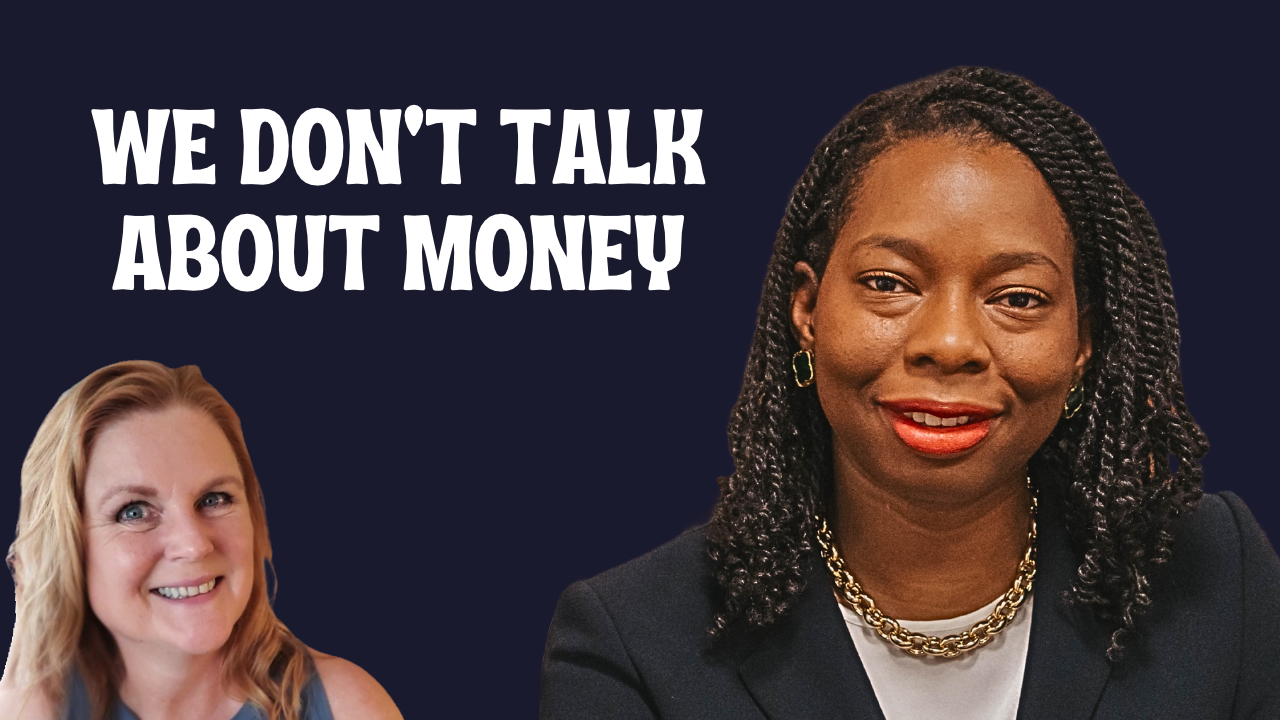
Did your family talk about money growing up? Mine didn’t much. My parents were entrepreneurs in a farming community, and while we weren’t sitting down for financial conversations, I still picked up a sense of how things were going. Children notice more than we sometimes realize.
Behavioral economist Etinosa Agbonlahor, who goes by Eti, joins me to talk about how those early experiences follow us into adulthood. She runs Decision Alpha and is the author of How to Talk to Your Parents About Money. Our conversation moves from what we charge in our businesses to what we teach our children, with plenty of room for the feelings that come along with both.
Your worth isn’t a price to figure out
When you sell a service, hearing “no” can feel personal. You’re offering your knowledge, your experience, and something you’ve put yourself into. It can be hard to separate someone’s response to that offer from how you feel about yourself.
Eti makes a distinction here that gives us something useful to work with. Your value as a person isn’t what you’re pricing. You’re looking at the problem your skills solve and what solving that problem means to the person who needs your help. The same skill can have different value in different circumstances.
That also changes the questions you can ask. What do customers need? How do they describe the benefit of your work? What alternatives are they considering? Eti’s work brings research into those conversations so business owners have more to go on than a guess or a competitor’s price.
The money lessons happening in the background
Eti’s mother played personal-development and money books during their drives to school. Later, she paid Eti to read books she selected and write reports about them. When Eti describes this as subtly planting seeds, I have to question just how subtle it was! Her mother was giving that curiosity some very clear encouragement.
We also talk about the lessons children learn when nobody explains the numbers. They notice tension, spending choices, and whether money feels like something they’re allowed to ask about. Eti connects that back to what I shared about my own family. A conversation doesn’t have to happen out loud for a child to come away with an idea about money.
The shoes were carrying a much bigger fear
Eti tells a story about a woman she met while hiking. Years earlier, the woman’s partner had left unexpectedly, and she had found herself raising their children on her own. When one of her teenagers wanted expensive shoes, she eventually bought them, but she stayed angry about that purchase long afterward.
As they talked, the woman recognized what had been underneath her reaction. She was afraid that indulging her daughter would leave her unprepared if she ever faced the same circumstances. By then, her children were adults, yet that old fear was still attached to the shoes.
We talk about the language families use around spending, including the difference between describing a cost and explaining a trade-off. Eti adds another layer: what emotion is behind the language? Understanding that gives us a chance to have a more honest conversation about the choice in front of us.
Making room for family money conversations
Eti’s book grew out of the situations people were bringing to her. Adult children wanted to know whether their parents would be okay in retirement. Others were worried about debt or major decisions after a loss. They cared, but they didn’t know how to bring it up.
Her approach makes room for the relationship as well as the practical questions. We each bring our own experiences and assumptions to the conversation. Recognizing those, and having some words to begin with, can help when a subject has been off-limits for years.
A lake, a book, and a little room to breathe
Our wine conversation takes us to New Zealand, where Eti remembers traveling alone and wishing she had friends there to share the experience. Then she decided to create an afternoon she wanted for herself: a lake, a book, some journaling, and a favorite sauvignon blanc. She describes the difference it made to choose that moment and enjoy being there.
Her second memory is a vent session with a girlfriend. They made room to say what was bothering them without rushing to find the bright side. As Eti talked, she realized how much she had been carrying. There’s something wonderful about a friend who will hear you out and let you put some of that down.
If a money conversation brings up more feeling than you expected, it might be worth getting curious about where that feeling began. What did you learn? What were the people around you trying to protect? And what would you like the people you love to understand now?
Connect with Eti
Explore Decision Alpha, download the free Behavioral Pricing Playbook, or learn about Fred, the interactive pricing guide. You can also find information about How to Talk to Your Parents About Money on Eti’s website.
HAVE A QUESTION?
Or idea for a guest?
SUBSCRIBE FOR WEEKLY LIFE LESSONS
And the occasional cocktail recipe.
We hate SPAM. We will never sell your information, for any reason.
