Your Story Doesn't Have to Be Polished to Matter
Aug 13, 2026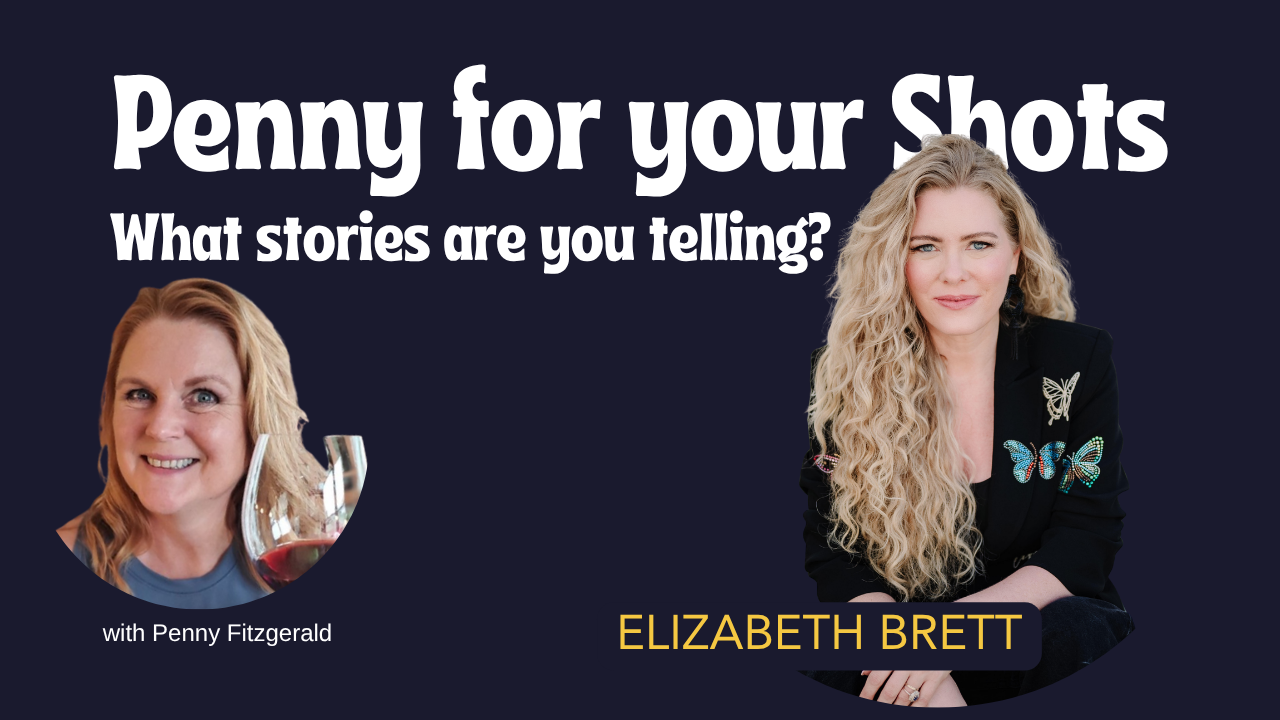
I've noticed something about the stories women tell about their own lives: the longer we've been doing the work, the more polished the story gets. And the more polished it gets, the less it sounds like anything that actually happened to us.
You know the story I mean. The one you've told at every networking event, every podcast interview, every "tell us a little about yourself" moment. It's true, technically. But somewhere along the way it stopped being something you were living and started being something you were performing.
I talked about this with Elizabeth Brett, and it stuck with me for days afterward.
Elizabeth spent almost a decade as an NBC reporter, the kind of job where you interview someone for thirty minutes and boil it down to a ninety-second segment, multiple times a day, on deadline, with cameras rolling. She told me something that made me sit up: she was taught, quite literally, down to her haircut and the color of her makeup, to become the version of herself that would work best on camera. "It was down to a T that I was being shaped into who I was supposed to be for my audience," she said. And then she said the thing that got me: she thinks every woman has some version of that. We all learn how to become who we're supposed to be to succeed, to fit the role, to fill the mold. And at some point, if we're lucky, we get to a place where we start taking the mask back off.
That's the part I don't want us to miss. Because I think a lot of us are sitting on stories we've decided aren't worth telling, not because they're not true, but because they're not finished. They're not polished. We haven't figured out the lesson yet, or the pretty way to say it, so we just... don't.
Elizabeth has a name for the story most of us keep reaching for instead. She calls it the origin story, the big, sculpted version of how you became who you are. There's a place for that one. But she pointed me toward something smaller and, honestly, more useful: what she calls your North Star story. It's not your whole life. It's a specific, small moment that explains why a particular piece of your work matters to you right now. Why this offer. Why this message. Why you, right now, at this point in your life.
I love that distinction because it takes the pressure off. You don't need to have your whole life sorted into a tidy three-act narrative before you're allowed to share anything real. You just need one true moment.
Elizabeth also talked about something she calls the sovereignty filter, a way of checking in before you share something to ask whether it's actually in integrity for you to share it right now. Not whether it's impressive. Not whether it's vulnerable enough to prove you're "real." Just: does this feel good for me to share, and what is it in service of? Some stories aren't ready yet, and that's fine. They get to mature. That reframe alone is worth sitting with, especially if you're someone who has felt pressure to overshare in the name of authenticity.
Then Elizabeth told me a story that wasn't polished at all, the kind you can tell is still close to her. Two summers ago, she was in the ocean with her seven-year-old daughter when the current pulled them past where either of them could stand. Three big waves came through, and by the third one, she knew she couldn't keep them both afloat. She screamed for her cousin on the shore, made it to him, and watched him carry her daughter to safety before she crawled onto the sand herself, knowing, in her words, that the woman who walked into that water wasn't the same woman who came out.
She didn't tell me that story because it was polished. She told me because it's true, and because it's the reason storytelling became her work instead of just her career. That's the whole point, isn't it? The stories that move people aren't the ones we've rehearsed until they're smooth. They're the ones that still have some weather in them.
Your audience doesn't need your highlight reel. They need to know they're not the only one who has felt behind, or scared, or unsure whether the version of themselves they're presenting is even real anymore. I've said for years that visibility is service, that when you share something honest, you're not asking for attention, you're offering someone else permission. Elizabeth said it a different way that I loved: storytelling was never really about you. It's about what you're offering the person listening.
So maybe this week isn't about finding your perfect origin story. Maybe it's about noticing the smaller, truer one you've been sitting on, the one that's a little unfinished, a little unpolished, and exactly the one someone else needs to hear.
HAVE A QUESTION?
Or idea for a guest?
SUBSCRIBE FOR WEEKLY LIFE LESSONS
And the occasional cocktail recipe.
We hate SPAM. We will never sell your information, for any reason.
